Download Ebook The Pastor: A Memoir, by Eugene H. Peterson
So, just be here, locate guide The Pastor: A Memoir, By Eugene H. Peterson now and also read that quickly. Be the very first to review this publication The Pastor: A Memoir, By Eugene H. Peterson by downloading in the link. We have some various other books to check out in this website. So, you could discover them additionally easily. Well, now we have done to provide you the ideal e-book to review today, this The Pastor: A Memoir, By Eugene H. Peterson is truly proper for you. Never disregard that you require this publication The Pastor: A Memoir, By Eugene H. Peterson to make far better life. Online book The Pastor: A Memoir, By Eugene H. Peterson will truly give simple of every little thing to review and take the perks.
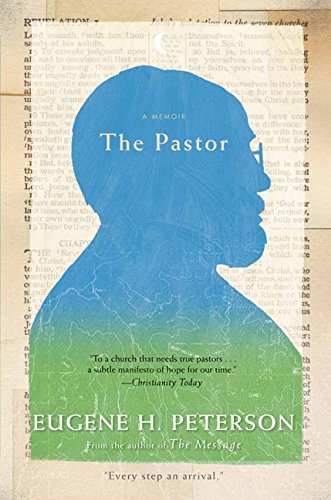
The Pastor: A Memoir, by Eugene H. Peterson

Download Ebook The Pastor: A Memoir, by Eugene H. Peterson
Is The Pastor: A Memoir, By Eugene H. Peterson publication your favourite reading? Is fictions? Exactly how's regarding history? Or is the most effective seller novel your choice to fulfil your spare time? And even the politic or religious publications are you looking for currently? Below we go we offer The Pastor: A Memoir, By Eugene H. Peterson book collections that you need. Lots of numbers of books from several industries are given. From fictions to scientific research as well as religious can be browsed as well as discovered right here. You could not worry not to discover your referred book to read. This The Pastor: A Memoir, By Eugene H. Peterson is among them.
Why ought to be publication The Pastor: A Memoir, By Eugene H. Peterson Publication is among the simple sources to seek. By obtaining the writer and theme to obtain, you can locate so many titles that supply their information to acquire. As this The Pastor: A Memoir, By Eugene H. Peterson, the motivating publication The Pastor: A Memoir, By Eugene H. Peterson will certainly give you what you should cover the work target date. And also why should remain in this web site? We will ask initially, have you a lot more times to go for shopping the books and also hunt for the referred publication The Pastor: A Memoir, By Eugene H. Peterson in book store? Many individuals may not have sufficient time to discover it.
Hence, this website offers for you to cover your trouble. We show you some referred books The Pastor: A Memoir, By Eugene H. Peterson in all kinds as well as themes. From typical author to the popular one, they are all covered to give in this web site. This The Pastor: A Memoir, By Eugene H. Peterson is you're searched for book; you simply should visit the web link page to display in this internet site and then go for downloading and install. It will certainly not take sometimes to get one book The Pastor: A Memoir, By Eugene H. Peterson It will certainly rely on your web link. Just purchase and also download and install the soft documents of this book The Pastor: A Memoir, By Eugene H. Peterson
It is so very easy, right? Why don't you try it? In this website, you could also discover various other titles of the The Pastor: A Memoir, By Eugene H. Peterson book collections that might have the ability to assist you locating the best remedy of your task. Reading this book The Pastor: A Memoir, By Eugene H. Peterson in soft file will likewise ease you to obtain the resource conveniently. You might not bring for those publications to someplace you go. Only with the device that always be with your all over, you can read this publication The Pastor: A Memoir, By Eugene H. Peterson So, it will be so rapidly to finish reading this The Pastor: A Memoir, By Eugene H. Peterson
In The Pastor, author Eugene Peterson, translator of the multimillion-selling The Message, tells the story of how he started Christ Our King Presbyterian Church in Bel Air, Maryland and his gradual discovery of what it really means to be a pastor. Steering away from abstractions, Peterson challenges conventional wisdom regarding church marketing, mega pastors, and the church’s too-cozy relationship to American glitz and consumerism to present a simple, faith-based description of what being a minister means today. In the end, Peterson discovers that being a pastor boils down to “paying attention and calling attention to ‘what is going on now’ between men and women, with each other and with God.”
- Sales Rank: #39763 in Books
- Brand: Eugene H Peterson
- Published on: 2012-09-18
- Released on: 2012-09-18
- Original language: English
- Number of items: 1
- Dimensions: 9.00" h x .84" w x 6.00" l, .75 pounds
- Binding: Paperback
- 336 pages
- The Pastor A Memoir
Review
“Eugene Peterson excavates the challenges and mysteries regarding pastors and church and gives me hope for both. This a must read for every person who is or thinks they are called to be a pastor and for every person who has one.” (William Paul Young, author of The Shack)
“If anyone knows how to be a pastor in the contemporary context that person is Eugene Peterson. Eugene possesses the rare combination of a pastor’s heart and a pastor’s art. Take and read!” (Richard J. Foster, author of Celebration of Discipline)
“I’ve been nagging Eugene Peterson for years to write a memoir. In our clamorous, celebrity-driven, entertainment culture, his life and words convey a quiet whisper of sanity, authenticity, and, yes, holiness.” (Philip Yancey, author of What Good is God)
“A good book for folks who like pastors. And a good book for folks who don’t. The Pastor is the disarming tale of one of the unlikely suspects who has helped shape North American Christianity.” (Shane Claiborne author of The Irresistible Revolution)
“More than a gifted writer, Eugene Peterson is a voice calling upon the churches to recover the vocation of the pastor in order to experience the renewing of their faith in the midst of an increasingly commercialized, depersonalized, and spiritually barren land.” (Dale T. Irvin, President, New York Theological Seminary)
“If you are hoping to be a pastor, or just to understand what that is, get this book and soak in it for at least three full days with no distraction. It may save your life and make you a blessing.” (Dallas Willard, author of The Divine Conspiracy)
“A gift to anyone who has tried answering the call to pastor, and to a church that needs true pastors. . . . It is a subtle manifesto of hope for our time.” (Christianity Today)
“Peterson found writing as a way to pay attention, and as an act of prayer. It’s our privilege to have his words, full of insight and truth. This book might be considered a long prayer for pastors.” (Englewood Review of Books)
“A book full of much needed wisdom that is written with eloquence.” (Seattle Post-Intelligencer)
“Peterson is a master storyteller. . . . The Pastor is a profound and important meditation . . . serves as a necessary reaffirmation of the true nature of a calling that in current American religious life seems largely lost.” (Religion & Ethics Newsweekly)
From the Back Cover
In The Pastor, Eugene H. Peterson, the translator of the multimillion-selling The Message and the author of more than thirty books, offers his life story as one answer to the surprisingly neglected question: What does it mean to be a pastor?
When Peterson was asked by his denomination to begin a new church in Bel Air, Maryland, he surprised himself by saying yes. And so was born Christ Our King Presbyterian Church. But Peterson quickly learned that he was not exactly sure what a pastor should do. He had met many ministers in his life, from his Pentecostal upbringing in Montana to his seminary days in New York, and he admired only a few. He knew that the job's demands would drown him unless he figured out what the essence of the job really was. Thus began a thirty-year journey into the heart of this uncommon vocation—the pastorate.
The Pastor steers away from abstractions, offering instead a beautiful rendering of a life tied to the physical world—the land, the holy space, the people—shaping Peterson's pastoral vocation as well as his faith. He takes on church marketing, mega pastors, and the church's too-cozy relationship to American glitz and consumerism to present a simple, faith-filled job description of what being a pastor means today. In the end, Peterson discovered that being a pastor boiled down to "paying attention and calling attention to 'what is going on right now' between men and women, with each other and with God." The Pastor is destined to become a classic statement on the contemporary trials, joys, and meaning of this ancient vocation.
About the Author
Eugene H. Peterson, author of The Message, a bestselling translation of the Bible, is professor emeritus of spiritual theology at Regent College, British Columbia, and the author of over thirty books. He and his wife, Jan, live in Montana.
Most helpful customer reviews
1 of 1 people found the following review helpful.
Peterson Writes About His Life as a Pastor
By Stephen W. Hiemstra ﻦ
One of the most dramatic appearances of God in the Bible comes in chapter 3 of Exodus when God appears to Moses in form of a burning bush. It is interesting to ask why God would appear in the form of a naturally occurring inkblot test. If the inkblots are properly prepared, they have no inherent structure so when a patient looks at them, the only structure seen is the structure imposed by the patient.[1] Is it any wonder that my kids, when they were small, used to confuse our pastor with Jesus? My kids are not the only ones; the inkblot image is a wonderful metaphor for how people today relate to their pastor and to God. The more enigmatic the pastor, the more fitting the inkblot image.[2]
In his memoir, The Pastor, Eugene Peterson captures this enigmatic character[3] when he writes:
“I can’t imagine now not being a pastor. I was a pastor long before I knew I was a pastor; I just never had a name for it. Once the name arrived, all kinds of things, seemingly random experiences and memories, gradually began to take a form that was congruent with who I was becoming, like finding a glove that fit my hand perfectly—a calling, a fusion of all the pieces of my life, a vocation: Pastor.” (2)
Peterson see the pastor as a particularly talented observer, much like God took animals to Adam to see what he would call them (Gen 2:19), as he writes:
“A witness is never the center, but only the person who points to or names what is going on at the center—in this case, the action and revelation of God in all the operations of Father, Son, and Holy Spirit.” (6)
But, of course, naming is the creative act of a sovereign, not of a passive observer. For this reason, some theologians describe God as a Suzerain (King of Kings) and Adam as his Vassal (king), but Peterson would chide at the whole idea of being an authority figure, preferring the title of pastor, not “Reverend or Doctor or Minister” (2) even though he was all of these things.
Even if Peterson prefers business causal, he is not just causally present. He writes:
“Staying alert to these place and time conditions—this topos, this kairos—of my life as a pastor, turned out to be more demanding than I thought it would.” (8)
Peterson’s sensitive to matters of time and space comes as a surprise. As Christians, we think of God in terms of the omnis—omnipresent, omniscient, omnipotent—all present, all knowing, and all powerful; but Christianity has no Mecca where we must worship or make a pilgrimage—God is not partial to a particular place and even Sabbath is not so much a day as a commitment to devote time to God. But for Peterson pastors must model themselves on God in his omnis in a sacramental sense: “For while we were still weak, at the right time Christ died for the ungodly.” (Rom 5:6 ESV) And Christ did not die in some random place; he died conspicuously—in front of the whole world—in Jerusalem. Therefore, Peterson cautions that “the life of faith cannot be lived in general or by abstractions.” (12)
Do you get the idea that Peterson chooses his words carefully?
Peterson’s idea of the pastor call is wrapped up in a peculiar package. He describes a dog wandering around marking his territory in a manner that appears haphazardly to a human observer, but no doubt makes perfect sense to the dog. He then writes:
“Something like that is the way pastor feels to me. Pastor: not something added on to or imposed on who I am; it was there all along. But it was not linear—no straight-line development.” (26)
This sort of explanation, which is potentially quite demeaning, describes an image of the pastor as a Myers-Briggs personality type of ESFP:
“Outgoing, friendly, and accepting. Exuberant lovers of life, people, and material comforts. Enjoy working with others to make things happen. Bring common sense and a realistic approach to their work, and make work fun. Flexible and spontaneous, adapt readily to new people and environments. Learn best by trying a new skill with other people.” [4]
This postmodern concept of a pastor leaves me wondering what would happen if Martin Luther or John Calvin were to come before an ordination committee today? While I know that Peterson’s pastor has great appeal today, I am not sure that Peterson intended his vision of the pastor to be normative, as it has become.
One of the attractive things about Peterson to me as I read this book in seminary was that he had been a church planter. At a time when organized churches seem to be wandering off the rails, God’s presence appears most conspicuously in new churches that have yet to be coopted by our culture. Peterson writes about an old rabbinic story:
“Shekinah is Hebrew word that refers to a collective vision that brings together dispersed fragments of divinity. It is usually understood as a light-disseminating presence bringing an awareness of God to a time and place where God is not expected to be—a place…God’s personal presence—and filled that humble, modest, makeshift, sorry excuse for a temple with glory.” (100-101).
I can relate to this Shekinah image, having worshipped in so many different places, in so many different styles of music (or none at all), and in so many different languages.
Peterson’s final chapters begin with a story of a visit to a monastery where the cemetery was always prepared for the next funeral, having an open grave as a reminder (289). This is fitting end because Christianity is the only religion that began in a cemetery (Matt 28:1-7). Citing Karl Barth, Peterson reminds us: “Only where graves are is there resurrection.” (290).
I have tried several times to review Eugene Peterson’s book, The Pastor, and flinched at the task, not knowing where to begin. Having written my own memoir, however, during the past year, his book started to make sense to me in spite of its nonlinearity. I think that I have read most of Peterson’s books, but this is a favorite, but do not ask me why. Still, I am sure that most pastors and seminary students will share my love for this book.
[1] What does Moses see? Moses sees God commanding him to return to Egypt and ask Pharaoh to release the people of Israel, something that had been on his heart for about 40 years (Exod 2:11-12; 3:10).
[2] This is at the heart of the psychiatric image of God and counseling model of the pastor. People have a lot of trouble with the transcendence of God. They do not want to be “fathered” with conditional love, they wanted to be “mothered” with unconditional love. For this reason, the postmodern image of God is more of a grandparent than a parent and people chide at the ideal that God is a father that actually requires anything at all of us. The code language normally used is to say that a pastor should be a “patient, non-anxious presence.”
[3] If you think that I am the only one to see an inkblot here, meditate a few minutes on Peterson's book cover.
[4] Myers-Briggs website
3 of 3 people found the following review helpful.
A Must-Read for Every Seminarian and Every Pastor
By Derek Atkins
One of my best friends recommended this book to me, and I thoroughly enjoyed reading it. In this book, Eugene Peterson explores the vocation of pastor, largely through tracing his own journey as a pastor, from his childhood experiences, through his resignation from his twenty-nine years of pastoring Christ the King Presbyterian in suburban Baltimore, Maryland. At times, this book feels more like an autobiography than a memoir; I think this is because of Eugene Peterson's repeated assertion of his conviction that pastoral ministry is a way of life, rather than just a job, and that much of what pastoral ministry involves is listening to people's stories.
And this leads me to what I think is one of this book's great strengths, and that is that Eugene Peterson does an excellent job of articulating what he believes the pastoral ministry is, as well as making it emphatically clear what he believes pastoral ministry is not. This book also gives a very candid look at what pastoral ministry is like "from the inside," although I imagine there are still layers of his ministry that he didn't reveal, for whatever reasons. Another strength of this book is that it helps readers, especially pastors and would-be pastors, to examine pastoral work as vocation, and to come to a fresh, different, and hopefully a better, understanding of what the pastoral vocation is, what it involves, and what its ultimate purpose is. In addition, this book is very readable--Peterson is an excellent writer, and his writing is at times almost lyrical.
I highly recommend this book to any who are either contemplating pastoral work, who are presently involved in pastoral ministry, or who wish to have a better understanding of what it is that pastors in their community do week in, week out. This book is a must-read for every seminarian and every pastor. I think laypeople who want to have a better understanding of their pastors' jobs would also greatly benefit from this book. Nor is this book limited to those from a Presbyterian background; I think this book would benefit anyone from the Christian tradition (both Protestant and Catholic), and even those from the Jewish tradition, since Peterson reports the observation of a Jewish colleague of his that much of what Jewish rabbis do is similar to what Protestant Pastors do.
2 of 2 people found the following review helpful.
Reviving the dignity in a world of spiritual buffoonery
By MrsOR
This is perhaps the only book I've read on the vocation of pastoral ministry that made me feel as though there was something noble in it. Most of the endless stream of books about pastoral ministry coming from the various conference circuits of influential mega-pastors fall into one of three categories: glorified spiritual middle management handbooks, guides to religious marketing or snake oil solutions to breathless "everything must change" conundrums. This book actually seems to tap deeper roots of soul care, tunneling under the therapeutic or academic into the genuinely spiritual matters of life and death glowing beneath the everyday of work and family life. After reading it I'm convinced that the genre of memoir may be the only way to write a book on pastoral ministry, since the spiritual journey of the minister is the only resource he or she can ultimately offer fellow pilgrims. I long for my life and vocation to be so rich and suffused with meaning and I'm thankful for more experienced travellers to show me where and how to look for it.
The Pastor: A Memoir, by Eugene H. Peterson PDF
The Pastor: A Memoir, by Eugene H. Peterson EPub
The Pastor: A Memoir, by Eugene H. Peterson Doc
The Pastor: A Memoir, by Eugene H. Peterson iBooks
The Pastor: A Memoir, by Eugene H. Peterson rtf
The Pastor: A Memoir, by Eugene H. Peterson Mobipocket
The Pastor: A Memoir, by Eugene H. Peterson Kindle

Tidak ada komentar:
Posting Komentar